Showing posts with label Thailand. Show all posts

Thursday, March 29, 2007

Si Fueris Romae, Romano Vivito More

The title of this entry, "si fueris Romae, Romano vivito more" translates as to "if in Rome, live in the Roman manner", but most people forget the rest of the original Latin aphorism: "si fueris alibi, vivito sicut ibi" which means, "if you are elsewhere, live as they do elsewhere".

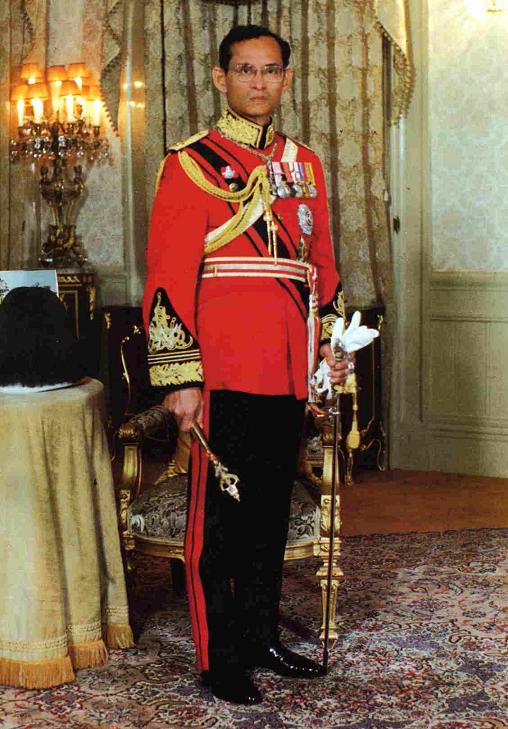
Which brings us to the tragicomic story of 57 year old Oliver Jufer, a Swiss expat who has spent the last ten years of his life in Thailand. After a savage bender, Herr Jufer got busted by the police in Chiang Mai for spraypainting over public portraits of the King of Thailand, HRH Bhumibol Adulyadej. When Jufer sobered up, he found himself facing five counts of lèse majesté. If convicted, Jufer faced up to twenty years in a Thai prison, so when he came to his senses, he sensibly came to a plea agreement whereby his sentence was reduced to 10 years after admitting guilt. In Thailand the idea that someone could criticize (much less insult) the king is regarded as an unthinkably offensive, and criminal act.

Now, before we begin, let me say that I do not regard his royal highness a dictator in the regular sense of the word, lacking, as he does, unlimited political powers in any legally defined way. He has not usurped authority from legitimately elected leaders, and in fact, he has been the only political force capable of maintaining what little legitimate political stability Thailand has enjoyed in the past 100 years. Thais have a genuine love and respect for their king that any tyrant on earth can only envy from afar.

What I'm trying to get at is that I have been somewhat remiss about covering those handful of dictators who rule as monarchs, benevolent or otherwise. Should Mswati III of Swaziland be lumped in with the likes of Turkmenbashi? Is Jigme Wangchuk of of Bhutan a dictator in the same sense as Robert Mugabe, even though his majesty has even greater political powers than Mugabe does? Why is it we can regard Oliver Jufer as a boorish criminal for spray painting over a portrait of the king, but we regain our sense of outrage when North Korea punishes people for political statements deemed insulting to the Dear Leader? What's the practical difference between an absolute monarch and a dictator beyond political legitimacy?

UPDATE: His royal highness has pardoned Oliver Jufer, as had been expected. The pardon comes with a catch: Jufer has to leave Thailand. I would imagine this is for his own safety, given the way Thais feel about their king.

Friday, September 22, 2006

Thai King officially backs coup d'etat

Thailand's King Bhumibol Adulyadej has made his tacit support of his country's military coup d'etat official. The English language Bangkok Post , His Majesty has been quoted as saying:

"For the sake of stability, we ask the people to be at ease, and to obey the instructions of General Sonthi"
This endorsement, while tepid in translated English, apparently packs enormous weight in Thailand, where The King wields political influence that overspills his somewhat more limited constitutionally mandated role. Indeed, the idea that the Royal Thai Army would depose the now widely detested former Prime Minister Thaksin Shinawatra without the explicit approval of His Majesty is widely considered to be utterly inconceiveable. With Shinawatra's political capital exhausted, General Sonthi has, quite rightly, deduced that his Majesty would repay the Army's undying loyalty to the throne with public support for the coup. You have to wonder if the monarch directed the Army to launch the coup, or if the generals simply knew that they would receive the King's support? With strict press censorship now in place, the answers are not forthcoming.

Jot Man continues to blog the coup, live from Bangkok, right here.

Thursday, September 21, 2006

The revolution will be televised (and then some)

The military coup d'etat in Thailand appears to be a fait accompli at this point, and a kind soul with the nom de plume of Jot Man has thoughtfully been blogging his way through the action in Bangkok. His efforts are no doubt aided by Bangkok's position as the financial and technological capital of Southeast Asia. Whle there have been dozens of coup d'etats, both successful and attempted, in the past decade. Most of them, however, have been in dreary places with abysmal telecommunications infrastructure, like Equatorial Guinea, Sudan, Fiji, et al.

I find myself inspired by his hands on coverage, and now I'm wondering why I'm sitting on the sidelines, missing all the action. I have, therefore, provided my credentials to the Royal Thai Embassy in Washington, DC in an effort to secure a cabinet position in the, admittedly currently non-existent, "Ministry of Violence". Granted, Thailand is by and large a devoutly Buddhist nation, and the concept of an American assuming the post of Minister of Violence may seem to be at odds with the country's religious and cultural heritage.

I maintain that with this coup, Thailand has begun the transition to becoming a fully secular democracy. For example, General Sondhi Boonyaratkalin - a Muslim - has now appointed himself to the position of Prime Minister, signalling a breakthrough in political advancement for non-Buddhists in Thailand. I breathlessly await a reply, and news of a cabinet appointment, from his excellency the ambassador.

Wednesday, September 20, 2006

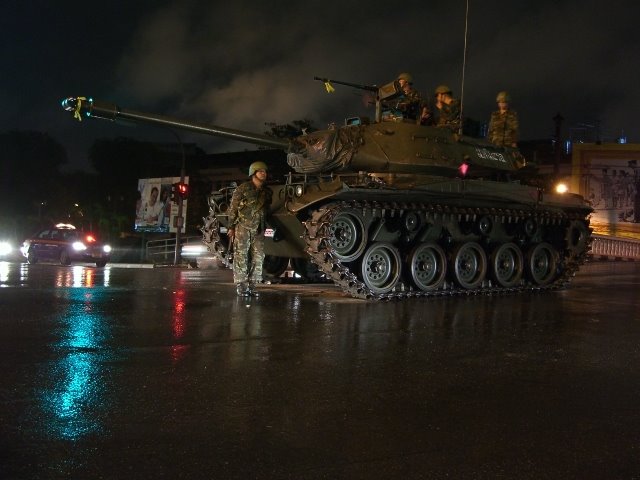
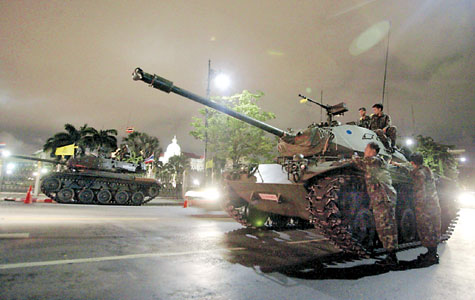
Coup d'etat!

When I'd heard that there had been a military coup d'etat in Southeast Asia, I immediately suspected that it had taken place in Cambodia, and hoped that, perhaps, the Vietnamese army had overthrown the moribund Communist regime in Hanoi.

But Thailand? Yes, Thailand. Rumors of a military coup had, apparently, been swirling for months as a result of the nation's political crisis, and now, the army has pulled the trigger.

General Sondhi Boonyaratkalin of the Royal Thai Army is now Prime Minister of Thailand after the current Prime Minister, the much loathed Thaksin Shinawatra, was deposed in a bloodless coup while out of the country to attend meetings at the United Nations.

While international messages of "concern" are issued, the coup appears to have broad support from the Thai people and carries at least the tacit support of the King. The General, however, claims that this is just a temporary move, saying:

We would like to reaffirm that we don't have any intention to rule the country and will return power to the Thai people as soon as possible.
It remains to be seen if the General will make good on his word to restore democracy to Thailand, thus ending his brief career as dictator, but veteran dictator enthusiasts have heard the "we will restore democracy soon" line from nearly every single ursurping brasshat from the late Mobutu Sese Seko to Pervez Musharraf. Needless to say, nobody should hold their breath.